Contemporary Investigative-Theater with Dan Swern of coLAB Arts and playwright TyLie Shider
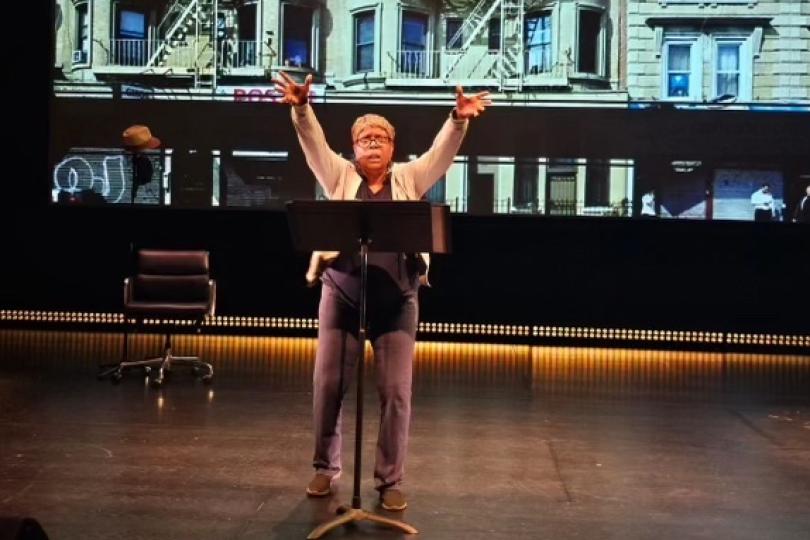




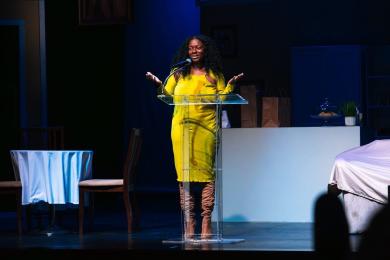
Header photo: Actress Cherene Snow in Shoptalk by Tylie Shider
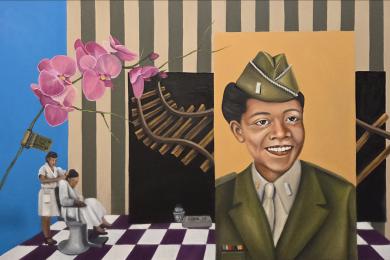
In May of 2022, which marked the 2nd year memorial of the murder of George Floyd, I presented a staged-reading of my play Whittier at ArtYard in Frenchtown, New Jersey. It was the first time I shared the play outside of the Twin Cities, where I conceived and developed it on a Jerome Fellowship at the Playwrights’ Center. Whittier is a contemporary docudrama I adapted from man-on-the-street-style-interviews during the 2020 uprisings in my titular neighborhood (and its surrounding areas) in South Minneapolis. It was also an opportunity for me to ostensibly marry both of my literary disciplines in journalism and playwriting. And it is this shared investigative sensibility that drew me to the work of coLAB Arts, whose performance (Veterans Voices: An Evening of Crankie Storytelling) at ArtYard married oral histories and crankies to center the stories of local veterans. A “cranky” is a manually cranked box that unveils a scroll which tells a story as it unfolds and is often paired with spoken word and music. Like theater, it is a relatively old storytelling device. Dan Swern, co-founder and producing director of coLAB Arts, and I, had an opportunity to discuss our preoccupation with oral history and creating contemporary documentary theater.
TyLie Shider: I am passionate about theatre as a vehicle for civic engagement. And this is what excites me about investigative theater, because it is an opportunity to invite civilians into the work that I am creating. It makes playwriting less lonely! What excites you about documentary theater?
Dan Swern: I love the excavation in the work. I love the sense of discovery. The moment I start a pre-interview with a narrator I’m starting to think about the script. What do they know that only they could possibly know? What do they feel that I could never hope to understand without their cipher? I’m less interested in driving an interview and having them respond to key questions, or having them establish a perfect chronology, and more interested in giving them space to spend time talking about what’s important to them — what they believe gives their life meaning and value. Before I came to verbatim theater I really cut my teeth using the same process with a few Shakespeare productions, editing and stitching scripts to focus tightly on a given theme. The last big Shakespeare project I created was a culinary-performance called Shake & Bake: Love’s Labour’s Lost, with a really lean adaptation that I worked on over a few years. I even staged a high school production before it went off-Broadway, doubling-down that an hour-long cut of the script would work even for a younger audience.
TyLie: You referred to your interviewees as narrators. A narrator steers the direction of a story and has autonomy. How involved are your subjects of interest? Do you invite them to edit their stories before the work is produced?
Dan: We spent a while considering how much control we’d give to narrators regarding their interview transcripts. As artists, we’ve found ourselves caught between two wildly different traditions. On the one hand, journalists believe that once you provide an interview on the record, that interview is set and can no longer be controlled by the interviewee. On the other hand, oral historians, who largely utilize the life course oral history interview practice that we prefer to employ, explicitly rely on the narrator to guide the transcription process and provide publishing approval. Where we’ve landed is that we invite all of our narrators to comment on their transcripts in case they misremembered anything, or if they were misheard by the transcriber, or even if they decide they want anything redacted. But ultimately we have to protect ourselves by retaining ownership of the transcript (not their story) and rights to publish and use their transcript. Ultimately, one of our main values is harm reduction, and we wouldn’t deign to publish or do something with a transcript that might cause harm. I also believe that we should compensate narrators if a project goes commercial and elements of their transcript get used as part of a verbatim theater script.
TyLie: My interest in biography and oral history began at my parents’ kitchen table where the adults in my family would gather for meals and often have what I’d call “back-in-the-day talk.” I was gripped by their stories about this era that I did not live through — the people, the music, the zeitgeist! It was like time traveling, and it provided a window into modern American history through our lineage. Where does your interest in biography come from?
Dan: I heard snapshots of stories and relationships at holidays and on Shabbat, but family meals were mostly spent hand-wringing about politics or Israel. Honestly, I came to oral history relatively recently. Back in 2017, coLAB Arts was still defining its new mission, to engage artists with social advocates and communities to create transformative new work, and we made a commitment to engage in as much person-centered narrative work as possible. That no matter the discipline of the project we were producing, whether it be mural, movement, music, or theater, we would include an oral history process to both create a body of unique source material, and as a way to ensure that the artistic narrative wouldn’t be considered the definitive narrative for those whose stories we’d be sharing. Prior to that, my work had always been more about macro-narratives — using theater as a way to broadly connect to community experiences. But once we started conducting interviews as part of our regular practice, and getting good at them and loving the process, something really switched for me in my practice and I enjoyed spending more intimate time with characters.
TyLie: I know writers who are intimidated by biography, but I see it as an opportunity to concretize singular stories that may otherwise remain unsung if I do not tell them. One of your shows at ArtYard explored some heartening stories from local veterans. Are you ever intimidated by working with autobiographies?
Dan: I don’t think I’d say I’m ever intimidated. I love what I do too much. But I would say we take our responsibility for stewarding these stories incredibly seriously and never stop trying to better tune our interview and archive process. I really agree with your point about the importance of daylighting these stories. I mostly conduct interviews with individuals who are housing precarious or economically vulnerable. I’ve had the good fortune to be invited into really diverse and intimate spaces. These are narrators who would otherwise not be included in their own history. I remind my graduate students of this every year — there is virtually zero first-person accounting of America’s houseless experience. I’m proud to be able to play a tiny part in reversing that.
TyLie: While I do work closely with the information I collect from interviews, I tend to steer away from verbatim drama in order to create composite characters and scenes set against the backdrop of historical or current events. Your work is verbatim. How would you describe the editing process for creating verbatim theater?
Dan: I really love verbatim theater work. I think what makes it especially enjoyable is how collaborative it is. In the beginning I’m working with a narrator, trying to help facilitate the telling of the full depth and breadth of their life. Then I’m working with my team at coLAB Arts producing the transcript, the annotation research, and the archive. By the time we’ve fully processed an oral history, four people have worked on it and we would have spent two or three months with that narrator’s story. Now we have almost two hundred oral histories in our archive!
When it comes to building a verbatim theater script you’re taking a giant dramaturgical leap of faith because you’re working with a testimonial based on memory, sometimes decades old, and definitely colored by perspective. You have to assume that the narrator is telling the truth as they remember it, and that the consequential experiences in their life are true. When we get to the rehearsal room we first workshop the script in front of an expert audience with the intention to elicit doubt — not to challenge the narrator’s experience but rather to help edit down the script so that the narrator’s intent isn’t obscured by seeming unreliability. From there, I take a final script into a devising process with the cast where we build a performance. Part of what’s beautiful about building scripts on oral history is that you’re leaving so much space for the narrator to define their own story. That interview freedom is important because I try to frame my scripts along the lines of joy and wonder, rather than the vulnerability or trauma that the project might otherwise be about. My most recent play, American Bhoot, is based on one 18-hour oral history with an Indian woman in permanent supportive housing. She gifted me so much detail about her life growing up in Gujarat that it really became more important for the audience to understand how kinetic her world was, and then only briefly spend time with her while she was houseless in New Jersey during the pandemic.
TyLie: What’s the origin story for your organization coLAB Arts? And what challenges, if any, are you facing post-quarantine?
Dan: We started coLAB Arts in 2007 in New Brunswick, NJ after graduating from Rutgers University. We were a group of arts students who didn’t want to move to either New York or Philadelphia, and wanted to figure out how to support a community of emerging artists interested in experimental and interdisciplinary work. We produced basement shows, multidisciplinary arts festivals, and a free Shakespeare festival, and after five years, we just found it too hard to build a capital infrastructure from scratch for a young creative community. We took a couple of years to decide if New Brunswick was still the right place for us, and realized that our most effective work was directly responsive to the community. So we re-tooled, changed missions, and became less about emerging artists and more about emergent design — identifying a solid practice for telling local stories across disciplines and communities. Since then we’ve really experienced incredible growth, employing a full-time and part-time staff, driving the local public art scene, managing multiple residencies and our own studio and performance space, and stewarding incredible partnerships across the state and at home in New Brunswick. Right now, our biggest challenge post-pandemic is responding to the tremendous community need for our services, particularly with regard to arts education. We can’t grow quickly enough and are hoping to increase our education staff and capacity later this year.
TyLie: Your work seems to be ephemeral, as in unpublished. Do you foresee publishing in order for other organizations to produce your plays? I think documentary theater is great for theater students at the college level!
Dan: Publishing is something I’d love to do! I’ve been so laser-focused for so long on building work directly in response to and for our community partners that we haven’t yet taken the plunge into distribution. I think part of it is also fear. I’ve been asked to license my play Banished which I wrote with an incredible journalist named Elizabeth Weill-Greenberg, about a family going through the sex offender registry process because of an incident that happened between their juvenile children. I carry a lot of responsibility for the people in these stories, but I think I’m ready to let another director take them on. TyLie, it’s a new world for me and I’d love the opportunity to learn from you.
TyLie: We met as artists in residence at ArtYard. How would you describe your time there?
Dan: Why aren’t more people talking about this place yet? ArtYard is incredible. The facilities, the staff, the leadership. There is so much love and support crammed across those buildings. And the hospitality from the people in Frenchtown, NJ is just beautiful. I was producing a social practice artist residency with four incredible visual artists, introducing them to oral history and thematic narrative work in their practice. Everyone felt incredibly taken care of, even at their most stressed moments. ArtYard is designed as a worker’s retreat. Wake up at 7 AM and jog down the Rail Trail along the Delaware River, eat breakfast at a cafe around the corner, and then bury yourself in your studio for the next 12 hours. It’s paradise and I can’t wait to go back.
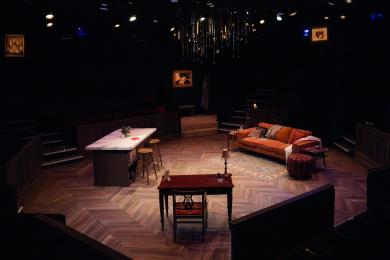
TyLie: I concur, Dan! My residency culminated in a staged-reading of my new play Shoptalk, a series of plays that explore the cathartic relationship between cosmetologists and their clientele. One of the acts in the play is inspired by a story ArtYard’s artistic director Jill Kearney told me at breakfast about her mother. It was an opportunity for me to pay homage to the barbershop and hair salon that I grew up in. My mother owned a hair salon the first dozen years of my life, and that’s where I started concretizing stories in real time. I’d use the dialogue I overheard in the salon to create comic strips, and then I’d Xerox the comics and sell them back to her clients on Saturdays. I had like a little newsstand set up in the front of her salon. What’s next for coLAB? And how could readers follow your work?
Dan: Since you mentioned comics… We just finished a new comic book commission, entitled Home: The Seeds in My Hands written by Susi Plotts-Pineda and illustrated by Courtney Menard, based on oral histories that Susi conducted with Oaxacan community gardeners over the pandemic in New Brunswick. The comic book looks at how agrarian culture in Oaxaca, Mexico influenced local immigrants, how they’ve taken those practices into their community gardening, and looks at the history of how NAFTA destroyed Mexico’s agrarian economy.
For me, the next verbatim theater project I’m working on is in partnership with international telemedical abortion organization Aid Access, based on oral histories with clients who live in abortion ban states, as well as service providers and advocates. We’ll continue conducting more oral histories through the end of the year before we start rehearsal in January with a tour to follow.
TyLie Shider is the inaugural playwright in residence at ArtYard. Recent projects include, Certain Aspects of Conflict in the Negro Family, The Gospel Woman at the National Black Theater, and Whittier.
Dan Swern is the co-founder and producing director for coLAB Arts in New Brunswick, NJ. Swern is the creator, director, and designer of the Drama Desk-nominated culinary-performance Shake & Bake: Love’s Labour’s Lost which ran off-Broadway in 2018. His most recent verbatim theater projects include American Bhoot and Banished: A family on the sex offender registry with Elizabeth Weill-Greenberg. Swern teaches Creative Engagement for the Masters in Communications and Media graduate program at Rutgers University’s School of Communications and Information.
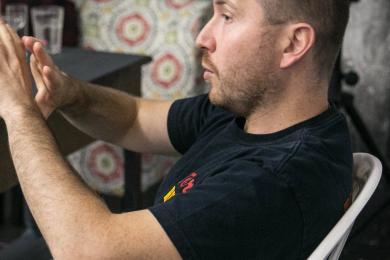
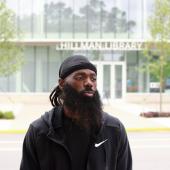
Above: Dan Swern headshot by photo Connie Kang